
Define your safety requirements
Before selecting a regulated mixer, map the specific hazard zones in your facility. The hardware you need depends entirely on the environment it will operate in, not just the mixing volume you require. Start by identifying the area classification for each room where the mixer will be installed.
Classify the hazard zone
Industrial mixers must meet strict standards based on the presence of flammable gases, vapors, or combustible dusts. If your facility handles volatile substances, you need equipment certified for Division 1 or Zone 1 environments. These areas have continuous or frequent hazardous conditions, requiring explosion-proof enclosures and sealed components. If your process only occasionally releases hazardous materials, Division 2 or Zone 2 ratings may suffice, offering a broader range of hardware options.
Verify sensor integration needs
Modern compliance often requires real-time monitoring of temperature, pressure, and vibration. AI-driven safety protocols in 2026 frequently rely on these sensors to predict failures before they cause incidents. Ensure your facility’s network infrastructure can support the data throughput required by these smart mixers. Without proper connectivity, even the most advanced safety features become useless.
Check regulatory certifications
Look for mixers that carry relevant certifications for your region, such as ATEX in Europe or NEC/CEC compliance in North America. These marks confirm the device has been tested against specific explosion risks. Do not assume a mixer is compliant simply because it works in a non-hazardous area. Verify the documentation matches your specific chemical inventory and operational temperature range.
Assess maintenance accessibility
Safety compliance also involves how easily you can inspect and maintain the equipment. Mixers installed in hard-to-reach zones require designs that allow for quick checks without full shutdowns. Choose models with accessible seals and modular components. This reduces the time technicians spend in hazardous areas, lowering overall risk while keeping operations running efficiently.
Verify ESG manufacturing standards
Compliance with 2026 ESG mandates requires proof of ethical manufacturing. You must verify that your regulated mixer supplier adheres to recognized environmental and social standards. This verification protects your organization from supply chain disruptions and reputational risk.
Check for recognized certifications
Look for ISO 14001 (environmental management) and ISO 45001 (occupational health and safety) certifications. These standards prove the factory has audited processes for waste reduction and worker safety. Ask the supplier for their current certificate numbers and verify them against the issuing body’s registry.
Audit material sourcing
Ensure the mixer’s components, especially rare earth magnets and circuit boards, come from conflict-free sources. The supplier should provide a chain-of-custody report tracing materials back to the mine or recycler. This is critical for meeting the EU’s Conflict Minerals Regulation and similar 2026 mandates.
Review supplier labor practices
ESG compliance includes fair labor. Request the supplier’s most recent social audit report. Look for evidence of living wages, reasonable working hours, and no child labor. If the supplier cannot provide this, they are a compliance risk regardless of the mixer’s technical specs.
Compare key technical specifications
Choosing a compliant regulated mixer requires looking past marketing claims and verifying the actual hardware capabilities. You need a framework that separates operational performance from legal compliance. This comparison focuses on three critical areas: mixing capacity, speed control precision, and the documentation required for regulatory audits.
Capacity and throughput
The mixing bowl volume determines your batch size, but the motor’s torque rating dictates whether the machine can handle dense, regulated formulations without stalling. A mixer rated for 20 quarts may struggle with high-viscosity compounds if the gear ratio isn’t designed for heavy loads. Always cross-reference the manufacturer’s torque curve with your heaviest expected batch weight.
Speed control and consistency
Regulated mixing often requires precise, repeatable speed settings to meet quality standards. Variable frequency drives (VFDs) offer the smoothest transitions, but you must verify the control panel’s accuracy. Look for mixers that provide digital feedback loops, ensuring the actual paddle speed matches the setpoint within a tight margin of error. Inconsistent speed leads to uneven mixing, which is a primary cause of compliance failures.
Compliance documentation
A mixer is only as compliant as its paperwork. Before purchasing, request the full technical dossier. This should include material safety data sheets for all wetted parts, electrical certification marks (such as UL or CE), and a calibration log template. Without these documents, you cannot prove to auditors that the equipment meets industry standards.
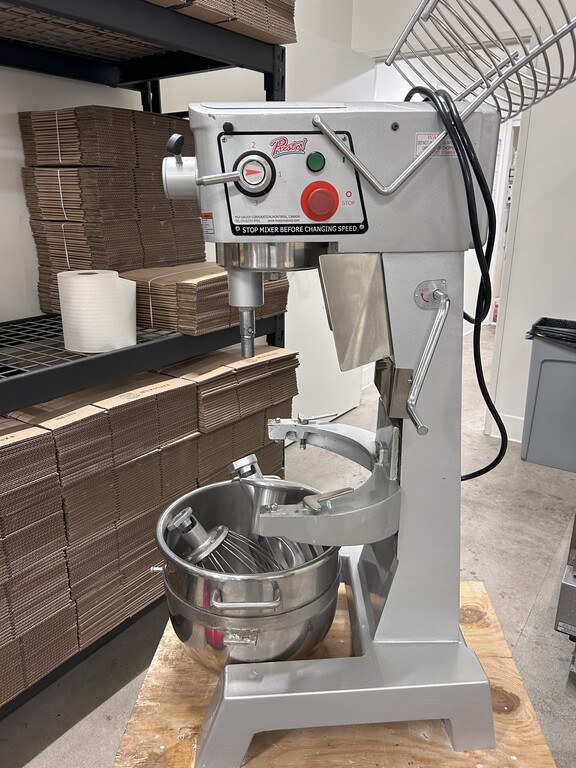
Side-by-side comparison
The table below illustrates how different regulated mixer models stack up against common compliance and performance metrics. Use this to filter options before contacting vendors.
| Model Type | Max Capacity | Speed Control | Certification | Est. Price |
|---|---|---|---|---|
| Planetary Industrial | 20-30 Qt | Variable Gear | UL/CE | $3,000-$5,000 |
| Continuous Flow | High Volume | VFD Digital | 3-A Sanitary | $15,000+ |
| Laboratory Bench | 1-5 Qt | Manual/Digital | ISO 9001 | $1,500-$2,500 |
| Heavy Duty Drum | 50-100 Gal | Hydraulic | ATEX (Hazardous) | $25,000+ |
Check supplier compliance documentation
Buying a regulated mixer without verifying paperwork is a liability risk. Manufacturers often claim compliance, but you need to see the actual certificates to ensure the equipment meets AI safety and ESG standards. This audit prevents fines and ensures the machinery is safe for your facility.
Ask for current ISO or CE certificates. Check the expiry dates and ensure the scope covers the specific mixer model you are buying. Expired or generic certificates often indicate poor oversight.
Request material safety data sheets (MSDS) and sustainability reports. Look for details on energy efficiency and hazardous material usage. This confirms the mixer aligns with modern environmental standards.
Check if the supplier is listed with relevant trade associations. Independent verification adds a layer of trust that internal claims cannot provide on their own.
Ask for a summary of their quality control logs. A compliant mixer should have a documented history of testing and inspection. This proves consistency in manufacturing.
Always keep copies of these documents for your records. If a supplier hesitates to provide them, treat it as a red flag and look elsewhere.
Finalize your regulated mixers 2026 purchase
Before you sign the contract or click "buy now," run through this final verification sequence. The difference between a compliant asset and a liability often comes down to documentation and physical verification. Use this checklist to ensure your regulated mixers 2026 selection meets all safety and ESG criteria.
Confirm that the manufacturer provides valid, up-to-date certificates for CE, UL, or RoHS compliance. These are not optional badges; they are your legal shield against liability. Check the certificate numbers directly on the issuing body’s database to ensure they haven’t been revoked or expired.
Request the Environmental, Social, and Governance (ESG) report or a Statement of Compliance for materials. Ensure the device meets current REACH and RoHS standards for hazardous substances. If your organization has specific carbon footprint goals, ask for the product’s lifecycle assessment data.
A compliant mixer must be supported. Verify the warranty covers both parts and labor for at least one year. Check if the manufacturer offers local service centers or authorized technicians in your region. Downtime is expensive; ensure you have a clear path to repairs without voiding your warranty.
Modern mixers rely on firmware for safety and compliance features. Ensure the vendor provides a clear policy for long-term software support. Ask if updates are free and how they are delivered. Outdated firmware can introduce security vulnerabilities or compliance drift over time.
When the unit arrives, inspect it before signing the delivery receipt. Look for physical damage, loose connections, or missing safety guards. Test the emergency stop button and all primary controls immediately. Do not rely on the manufacturer’s pre-shipment checks; your team’s verification is the last line of defense.
Common questions about compliant mixers
Choosing a compliant regulated mixer requires balancing technical safety with administrative reporting. Below are answers to the most frequent questions regarding AI integration and ESG standards.
How do I verify AI safety integration?
Ensure the mixer’s control software includes real-time anomaly detection. Look for hardware-level interlocks that cut power if the AI predicts a collision or overload. Verify that the system logs all automated decisions for audit trails. This ensures you can trace exactly why a safety intervention occurred.
What ESG reporting standards apply to industrial mixers?
Most facilities must track energy consumption and material waste per batch. Choose mixers with ISO 50001 energy management certification to streamline this process. The device should export usage data in formats compatible with standard ESG reporting tools. This reduces the manual effort required for annual sustainability disclosures.
Are legacy mixers compliant with 2026 regulations?
Generally, no. New regulations require digital connectivity for remote monitoring and data logging. Older analog models cannot provide the necessary audit trails for safety or ESG compliance. You may need to retrofit controllers or replace the unit entirely to meet current legal standards.
No comments yet. Be the first to share your thoughts!