
Define the mixer scope
The term "regulated mixers 2026" refers specifically to industrial mixing equipment subject to legal and safety frameworks, not social networking events or professional networking gatherings. This guide addresses machinery used in manufacturing, chemical processing, food production, and construction.
Industrial mixing equipment includes high-shear mixers, ribbon blenders, paddle mixers, and continuous inline mixers. These machines handle materials ranging from viscous pastes to dry powders and aggressive chemicals. Because they involve moving parts, high energy consumption, and potential exposure to hazardous substances, they fall under strict regulatory scrutiny.
Key regulatory bodies and standards differ by region and application. In the United States, the Occupational Safety and Health Administration (OSHA) enforces workplace safety standards, while the Food and Drug Administration (FDA) regulates equipment contacting consumable products. The European Union applies Machinery Directive 2006/42/EC, requiring CE marking and conformity assessment. Other regions have their own safety codes, such as CSA in Canada or AS/NZS in Australia and New Zealand.
Compliance begins with understanding which regulations apply to your specific equipment and industry. Misidentifying the scope can lead to costly retrofits, production shutdowns, or legal liability. This guide walks you through the steps to identify, assess, and meet those requirements for 2026.
Identify applicable regulations
Before purchasing or installing regulated mixers, determine which federal, state, and industry standards apply to your specific use case. Compliance requirements differ sharply between industrial processing equipment, medical devices, and residential plumbing fixtures. Using the wrong compliance framework can lead to failed inspections, legal liability, or product recalls.
Start by identifying the primary regulatory body for your industry. If you are manufacturing industrial machinery, the Occupational Safety and Health Administration (OSHA) sets federal safety standards for guarding and operational controls. For equipment that contacts consumables, such as food or pharmaceuticals, the Food and Drug Administration (FDA) enforces strict material safety and sanitation standards. In the European Union, the Machinery Directive (2006/42/EC) mandates rigorous risk assessment and CE marking before any machinery enters the market.
Next, verify state and local plumbing codes if the mixer is part of a permanent installation. The Uniform Plumbing Code (UPC) and International Plumbing Code (IPC) are the most widely adopted frameworks in the United States, but many states have amendments that restrict specific materials or flow rates. For example, California’s Title 20 sets efficiency standards for residential plumbing fixtures that exceed federal minimums. Always check with your local building department to confirm which code edition is currently enforced in your jurisdiction.
For specialized industries, look for third-party certification standards that often carry the weight of law. In the United States, Underwriters Laboratories (UL) or NSF International certifications are frequently required by insurance carriers and health inspectors. In Europe, the European Committee for Electrotechnical Standardization (CENELEC) provides the technical specifications that support CE marking. Relying solely on manufacturer claims is risky; always request the actual test reports or compliance certificates.
Audit mechanical safety systems
Before the mixer powers on, physical safeguards must be verified. A mechanical audit confirms that guards, interlocks, and emergency stops function correctly to prevent accidental contact with moving parts. This step prioritizes hardware integrity over software settings, ensuring the machine cannot operate when safety conditions are not met.
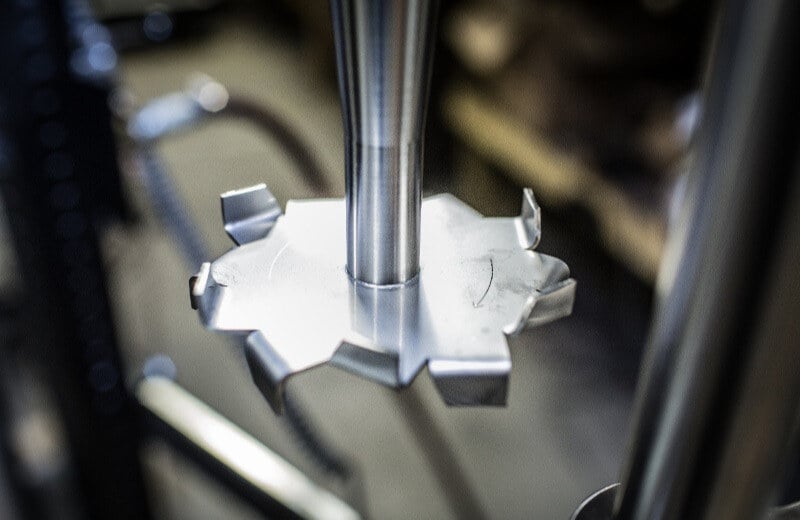
Check that all fixed guards are bolted securely with no visible cracks or deformation. For removable guards, verify that they are present, undamaged, and sit flush against the housing. Any guard that does not return to its closed position automatically must be replaced immediately. These barriers are the first line of defense against contact with blades or impellers.
Simulate an open-door condition by slightly lifting the lid or unlatching the access panel. The mixer must fail to start, or stop immediately if already running. Listen for the distinct click of the interlock switch engaging. If the machine operates with the guard bypassed or ajar, the interlock mechanism is compromised and poses a severe entanglement risk.
Press the emergency stop (E-stop) button while the motor is running. The power must cut immediately, and the machine should not restart until the button is manually reset and twisted. Test both primary and secondary E-stop stations if equipped. This ensures operators can halt hazardous motion instantly during a jam or entanglement event.
This sequence creates a reliable safety net. If any component fails these checks, the mixer must be taken out of service for repair. Do not attempt to bypass interlocks for convenience; doing so voids compliance and endangers personnel.
Verify electrical and control compliance
Before commissioning any regulated mixer, you must validate that the control systems meet 2026 standards for electrical safety, grounding, and software integrity. This verification prevents catastrophic failure and ensures regulatory acceptance. Treat this phase as a non-negotiable checkpoint; skipping it voids warranty coverage and exposes operators to severe liability.
Check grounding and bonding
Start with the physical electrical connections. Verify that the mixer chassis is properly grounded to the facility earth ground. Use a multimeter to test continuity between the chassis and the ground pin of the power inlet. Resistance should read near zero ohms. Check all bonding straps between moving parts and the static frame. Loose bonds create static discharge risks, especially in dry environments or when handling flammable powders.
Validate control logic and software
Next, audit the control software. Ensure the firmware version matches the approved regulatory build. Check that all safety interlocks—such as emergency stops, door switches, and overload sensors—are mapped correctly in the logic controller. Run a simulation mode to confirm that the system shuts down immediately when a fault is detected. Do not rely on visual inspection alone; test the actual response time of the sensors against the controller’s reaction speed.
Review electrical safety certifications
Finally, confirm that all electrical components carry current safety certifications. Look for UL, CE, or IEC marks on motors, variable frequency drives, and control panels. Verify that the wiring diagrams in the manual match the actual installation. Any deviation requires immediate correction. Keep a copy of these certificates on-site for inspection by safety officers or regulatory auditors.
Document and certify operations
Finalize your compliance file by assembling maintenance logs, operator training records, and certificates of conformity. This documentation proves that your regulated mixer meets all safety and operational standards.
Maintain maintenance logs
Keep detailed records of all maintenance activities. Include dates, parts replaced, and technician signatures. These logs demonstrate proactive care and help identify recurring issues before they cause failures.
Record operator training
Document every operator’s training session. List the topics covered, the date, and the trainer’s name. Signed attendance sheets or digital records confirm that staff understand safety protocols and operational procedures.
Obtain certification of conformity
Secure a certificate of conformity from the manufacturer or a certified third-party inspector. This document verifies that the mixer meets all relevant regulatory standards. Keep this certificate in your primary compliance file for easy access during audits.
Common compliance questions for regulated mixers
Regulatory scrutiny on mixing equipment is intensifying as 2026 standards take effect. Operators often face three high-stakes questions regarding liability, inspection cadence, and retrofitting older units. Answering these correctly prevents costly shutdowns and ensures your facility remains audit-ready.
No comments yet. Be the first to share your thoughts!