
Compliance with 2026 regulated mixers requires strict adherence to OSHA and ISO standards, focusing on risk assessment, physical guarding, and documented maintenance. This guide outlines the mandatory steps for industrial safety in manufacturing and chemical processing environments.
Identify applicable safety standards
Regulated mixers are heavy-duty industrial machines used in manufacturing, chemical processing, and food production. They are subject to strict safety and legal frameworks designed to prevent mechanical failure, chemical exposure, and physical injury. Compliance requires identifying the specific standards that apply to your equipment type and operating environment.
The primary regulatory bodies governing these systems include the Occupational Safety and Health Administration (OSHA) in the United States, which enforces workplace safety laws, and international standards organizations like ISO, which provide technical benchmarks for machinery design. In Europe, the CE marking indicates conformity with health, safety, and environmental protection standards.
To verify compliance, you must first determine the classification of your mixer. Is it a high-shear industrial blender, a concrete mixer, or a pharmaceutical processing unit? Each category has distinct regulatory requirements. For example, OSHA's General Industry standards (29 CFR 1910) cover machine guarding, while specific sectors like food and pharmaceuticals may require additional FDA or EU regulations.
Start by reviewing the machine's original design specifications against these standards. Look for evidence of risk assessment documentation, proper guard installation, and maintenance logs. If the equipment lacks clear certification or appears modified without safety validation, it likely fails compliance checks. Always consult official regulatory guidelines rather than commercial blogs to ensure accuracy.
Conduct a risk assessment
Before any compliance audit, you must perform a thorough risk assessment. This step identifies hazards specific to your mixer type and application. OSHA and ISO standards require this baseline to prevent workplace injuries and equipment failure. Skipping this phase leaves your operation vulnerable to regulatory penalties and safety incidents.
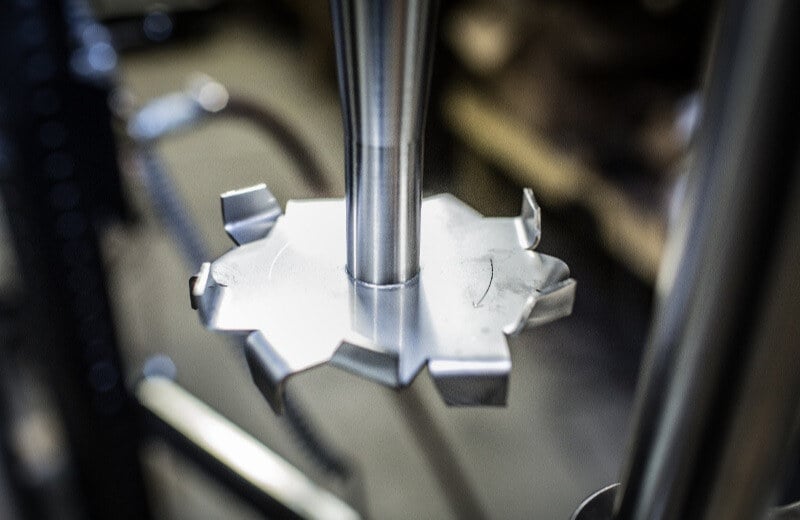
Begin by cataloging every mixer in your facility. Note the model, capacity, and primary function. High-shear dispersers pose different risks than low-shear blenders. Document the materials being mixed, especially if they are flammable, corrosive, or toxic. This inventory forms the foundation of your risk profile.
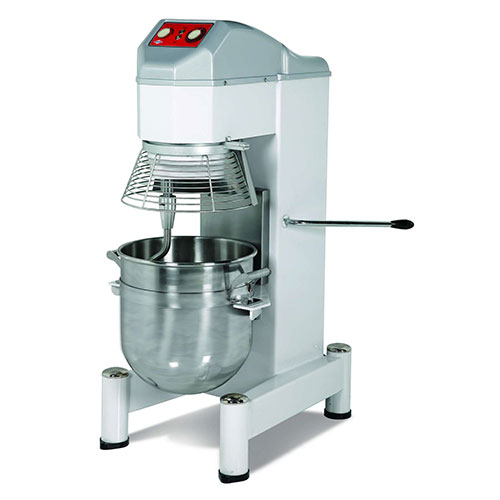
Evaluate potential failure points. Look for unguarded rotating parts, excessive vibration, or heat buildup. Assess chemical compatibility between the mixer materials and the substances being processed. Identify risks of chemical splashes, dust explosions, or toxic fume release. This analysis determines the necessary engineering controls.
Review how workers interact with the equipment. Consider the frequency of cleaning, maintenance, and loading. Identify ergonomic risks such as heavy lifting or awkward postures. Assess the potential for human error during startup or shutdown. This step highlights where training or procedural changes are needed to mitigate risk.
Record all identified hazards and the controls implemented to reduce risk. This documentation is mandatory for compliance audits. It should include risk ratings, responsible parties, and timelines for corrective actions. Keep these records accessible for inspectors and safety teams.
A proper risk assessment is not a one-time event. It must be updated whenever you change materials, modify equipment, or introduce new processes. Regular reviews ensure that your compliance measures remain effective and your workers remain safe.
Install required safety guards
Compliance with 2026 standards requires the immediate installation of physical engineering controls before any operational testing begins. The primary goal is to isolate operators from hazardous moving parts, specifically high-speed agitator blades and drive mechanisms. Regulatory bodies like OSHA emphasize that administrative controls, such as training or warnings, are insufficient without robust physical barriers.
Begin by verifying that all fixed guards are securely bolted to the mixer frame. These guards must prevent access to pinch points and rotating shafts during normal operation. Ensure that the guard material is compatible with the mixer’s chemical environment to prevent degradation that could compromise integrity.
Next, install emergency stop (E-stop) mechanisms within immediate reach of the operator’s position. These controls must be clearly marked, red, and mounted on a yellow background. Test the E-stop function to confirm it triggers an immediate, hard cutoff of the power supply, overriding any software-based shutdown protocols.
Finally, document the installation of each guard and interlock. This record serves as proof of compliance during regulatory audits. Ensure that all safety labels and warning signs are affixed to the machine according to ISO standards, providing clear instructions for safe operation and maintenance.
Maintain inspection logs for audit defense
Regulatory bodies do not verify compliance based on promises; they verify it based on records. When an OSHA inspector or an ISO auditor requests proof that your mixers meet 2026 safety standards, they expect to see a chronological paper trail. This trail consists of dated inspection reports, repair invoices, and calibration certificates. Without these documents, you cannot prove that a machine was safe at the time of an incident, regardless of its actual condition.
Think of your maintenance log as the legal shield for your operation. If a mixer causes injury or fails a safety test, the absence of a maintenance record is often treated as evidence of negligence. The burden of proof shifts entirely to the operator. A well-maintained log demonstrates due diligence, showing that you identified hazards, addressed them, and verified the fix before returning the equipment to service.
Structure your maintenance records
Your documentation must be structured to withstand scrutiny. Every entry should include the date, the specific machine ID, the nature of the inspection or repair, and the name of the technician who performed the work. Attach photos of any defects found and the subsequent repairs. If a component was replaced, include the part number and the vendor invoice. This level of detail creates an unbroken chain of custody for the machine's safety status.
Schedule regular audits of your logs
Keeping a log is not enough; you must audit the log itself. Schedule monthly reviews to ensure all entries are complete and accurate. Look for gaps in dates or inconsistent formatting. These inconsistencies can be exploited by auditors to question the validity of your entire safety program. A clean, consistent log signals a disciplined operation. A messy log signals chaos.
Use a checklist for consistency
Standardizing your inspection process reduces the chance of human error. A printed checklist ensures that every critical component is examined during every scheduled maintenance window. This reduces the likelihood of missing a minor defect that could escalate into a major compliance failure.
-
Visual inspection of all cables and connectors for damage
-
Check grounding integrity and earth continuity
-
Verify emergency stop functionality
-
Test all safety interlocks and guards
-
Record findings in the maintenance log with date and technician name
Retain records for the required period
Retention policies vary by jurisdiction and industry, but the general rule is to keep records for the lifespan of the machine plus several years. Some regulations require up to five years of documentation. Consult your local regulatory body to determine the exact requirement. Failure to retain records for the mandated period can result in significant fines, even if the records themselves were accurate.
Train operators on safety protocols
Regulated mixers present high-stakes hazards, from electrical arcing to mechanical entrapment. While engineering controls like guards and interlocks provide the first layer of defense, human error remains a primary compliance risk. Training must bridge the gap between theoretical safety rules and the physical reality of the control room.
Effective operator training goes beyond basic startup procedures. It requires a structured curriculum that covers hazard recognition, emergency shutdown sequences, and the specific limitations of the mixer’s safety systems. Operators must understand why a guard cannot be bypassed and the legal consequences of doing so. This training should be documented and repeated annually to ensure retention.
OSHA guidelines emphasize that training must be tailored to the specific machinery and the operator’s role. Generic safety modules are insufficient for regulated environments. The program should include hands-on simulations of failure scenarios, such as a jammed impeller or a power surge, to build muscle memory for safe responses. Verification of competency through practical assessments is required before an operator is authorized to work independently.
Common compliance mistakes
Regulated mixers 2026 compliance failures often stem from preventable oversights rather than complex technical defects. Operators frequently bypass safety interlocks to speed up production, a violation that triggers immediate OSHA citations and significant fines. Ignoring maintenance logs is equally dangerous; without documented proof of routine inspections, you cannot demonstrate due diligence during an audit.
The risk assessment process must be the first step in any compliance strategy. Before installing regulated mixers, verify that all guarding mechanisms are intact and functional. Maintenance logs must be updated daily, not retrospectively. Training records should explicitly cover emergency shutdown procedures, ensuring every operator knows how to react when a safety protocol is breached.
Failure to adhere to these protocols creates a false sense of security. Auditors look for gaps in documentation as much as physical defects. If your logs are incomplete or your training records are outdated, the entire operation is considered non-compliant, regardless of the equipment's actual condition. Prioritize rigorous record-keeping and strict adherence to safety interlocks to avoid costly penalties.
No comments yet. Be the first to share your thoughts!