
Identify your mixer classification
Before you can verify compliance, you must determine the regulatory category of your product. The label on your bottle dictates which agency oversees your operation: the Food and Drug Administration (FDA) or the Alcohol and Tobacco Tax and Trade Bureau (TTB). This distinction is not merely administrative; it determines your labeling requirements, manufacturing standards, and tax obligations.
The primary question is whether your product contains alcohol. If your mixer is non-alcoholic (less than 0.5% ABV), it falls under FDA jurisdiction as a standard food or beverage. You must comply with the Federal Food, Drug, and Cosmetic Act, including ingredient labeling and allergen declarations. These products do not require TTB approval for formula or labeling, though they must still meet general safety standards.
If your product contains more than 0.5% alcohol, it is likely a Ready-to-Drink (RTD) cocktail or a spirit-based beverage. These products fall under TTB jurisdiction. The TTB regulates these products based on their alcohol source—whether they are distilled spirits, wine, or malt beverages. This classification affects your excise tax rates and the specific labeling statements required on your package.
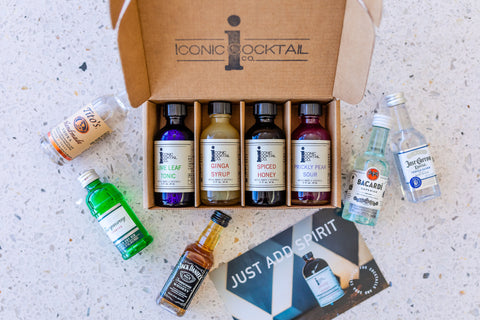
The line between these categories can be blurry, especially as new beverage formats emerge. RTDs often combine spirits with non-alcoholic mixers, creating a hybrid product that requires careful classification. Misclassifying your product can lead to significant penalties, including product seizures or fines. Use the comparison below to understand the core differences between FDA and TTB regulated mixers.
| Product Type | Primary Agency | ABV Threshold | Primary Compliance Focus |
|---|
Review sustainable packaging claims
Auditing packaging claims requires matching material specifications against current regulatory definitions. The 2026 compliance landscape penalizes vague terminology like "eco-friendly" or "green" without substantiation. Regulators and platforms increasingly require specific disclosures about recyclability, compostability, and recycled content percentages.
Verify material composition
Check every packaging component—bottles, caps, labels, and outer boxes—against the FTC Green Guides and local jurisdiction requirements. Ensure that any "recyclable" claim is accurate for the majority of consumers in the target market. If a component is technically recyclable but locally unavailable, the claim may be misleading. For "compostable" claims, verify certification from recognized bodies like BPI or TUV Austria.
Audit marketing language
Remove ambiguous adjectives. Replace "sustainable" with specific metrics, such as "made with 100% post-consumer recycled paper." Ensure that any visual imagery on the packaging or website does not imply environmental benefits that do not exist. A green leaf icon on a non-recyclable plastic bottle is a common greenwashing trigger.
Cross-reference supply chain data
Request documentation from your packaging supplier confirming the source of materials. Third-party certifications like FSC (Forest Stewardship Council) for paper products or SCS Recycled Content for plastics provide defensible proof. Keep these documents on file for audit purposes.
Confirm AI flavor development safety
Before launching any novel cocktail mixer, you must verify that AI-generated flavor profiles meet regulatory safety standards. Artificial intelligence can synthesize complex ingredient combinations, but it does not inherently validate them for human consumption. A flavor profile that is chemically interesting is not automatically safe. You need to ensure that every novel compound has undergone proper toxicological assessment.
The primary benchmark for safety in the United States is the FDA’s Generally Recognized As Safe (GRAS) determination. If your AI has introduced a new flavoring substance, it must either have a GRAS notification on file with the FDA or be supported by a substantial body of scientific evidence. Relying solely on algorithmic generation without human verification is a compliance risk.
Start by auditing the ingredient list generated by your AI. Identify any novel compounds or synthetic flavorings that are not already on the FDA’s list of recognized safe substances. For these items, you must commission a third-party safety assessment. Do not skip this step; the cost of a safety audit is far lower than the cost of a recall or legal liability.
Once you have the safety data, document the entire process. Keep records of the AI’s input parameters, the generated flavor profiles, and the resulting toxicological reports. This documentation proves that you exercised due diligence. If regulators question a specific flavor, you need to show that the safety was verified, not just assumed.
Frequently asked questions about mixer compliance
Navigating the 2026 regulatory landscape for cocktail mixers requires precision. Missteps in labeling, tax classification, or shipping protocols can trigger immediate penalties. Below are the most critical questions regarding mixer compliance, audits, and recent legislative shifts.
Failure to adapt to these 2026 changes is not just a logistical error—it is a legal liability. Prioritize official state alcohol control board guidelines over general industry advice, as local regulations often diverge significantly from federal baselines.
No comments yet. Be the first to share your thoughts!