

For privacy-conscious businesses, the promise of cryptocurrency mixers is enticing: enhanced transactional confidentiality, protection from corporate espionage, and the ability to shield sensitive financial flows. Yet, as regulators worldwide tighten oversight, the challenge is no longer just about finding a mixer that works, but one that operates within the bounds of the law. In 2025, the stakes are higher than ever. The collapse of unregulated mixers and the evolving patchwork of anti-money laundering (AML) rules mean that businesses must be more discerning than ever in their choice of mixing service.
Understanding the Regulatory Landscape: Why Compliance Matters
The regulatory climate around regulated crypto mixers has shifted dramatically over the past few years. In the United States, cryptocurrency mixers are now classified as Money Services Businesses (MSBs) by FinCEN, which means they must register and comply with strict AML and Know Your Customer (KYC) requirements. Non-compliance can result in stiff penalties, including multimillion-dollar fines and even prison time for executives. Recent history reinforces this: the U. S. Treasury’s sanctions on Blender. io in 2022, and the high-profile legal battles around Tornado Cash, have shown that regulators are willing to act decisively against non-compliant services.
Yet, in November 2024, a U. S. appeals court overturned the Treasury’s sanctions against Tornado Cash, highlighting the legal ambiguity that still surrounds some aspects of mixer regulation. Importantly, this ruling did not greenlight all mixers, especially those that fail to implement robust compliance measures. For businesses, the lesson is clear: only mixers that proactively address legal requirements and maintain transparent operations can be considered safe for enterprise use.
Key Criteria for Choosing a Compliant Cryptocurrency Mixer
When evaluating compliant cryptocurrency mixers, businesses must look beyond marketing claims and scrutinize a service’s operational and regulatory credentials. Here are the essential factors to consider:
- MSB Registration: Is the mixer registered with FinCEN or other relevant authorities in its jurisdiction?
- AML/KYC Integration: Does the service conduct identity verification or transaction screening to prevent illicit activity?
- Sanctions Screening: Has the mixer been flagged or sanctioned by OFAC or similar agencies? If so, steer clear.
- Transparency: Does the provider publish audit reports and compliance certifications?
- Data Security: What protocols are in place to secure user data and transaction records?
The best regulated mixers will openly share their compliance frameworks and make it easy for clients to verify their status. Choosing a service with a proven track record of regulatory cooperation can help businesses avoid reputational and legal risk. For more on how regulated mixers achieve this delicate balance, see how regulated crypto mixers balance privacy and compliance in 2024.
Current Market Leaders and Their Compliance Features
The landscape of business crypto privacy solutions is evolving rapidly. As of October 2025, several mixers stand out for their commitment to both privacy and compliance. Whirlpool, integrated with Samourai Wallet, leverages CoinJoin technology and operates with a fixed fee structure; Wasabi Wallet also uses CoinJoin and routes traffic through Tor for added anonymity, while maintaining a 0.3% fee. Newer entrants like Inmix are building their reputations on transparency and robust AML controls.
However, it isn’t just about technology. The most reputable services have invested in compliance partnerships, integrating with blockchain analytics tools like Chainalysis or Elliptic to proactively monitor transactions and flag suspicious activity. These integrations allow mixers to offer secure crypto transactions while staying on the right side of regulators. For a deeper dive into how these solutions enable privacy without breaking compliance, explore how regulated crypto mixers enable privacy without compromising compliance.
For privacy-conscious businesses, the calculus of using a crypto mixer is more nuanced than ever. Regulatory scrutiny, especially in major markets like the US and EU, means that even the most innovative privacy solutions must be built on a foundation of legal rigor. As compliance technology matures, the distinction between a responsible privacy tool and a regulatory liability becomes sharper. Businesses that fail to perform due diligence risk not only financial penalties, but also reputational fallout and operational disruptions.
Best Practices for Corporate Adoption of Regulated Mixers
To navigate this complex environment, organizations should establish clear internal policies and workflows around the use of regulated crypto mixers. This starts with cross-departmental collaboration: legal, compliance, and IT teams must work together to vet providers, assess ongoing risks, and monitor evolving requirements. Regular training and scenario analysis can help staff recognize red flags and respond quickly to regulatory changes.
It's also essential to document every step of the due diligence process. Keep records of provider registrations, compliance certifications, and any third-party audits. This documentation not only supports internal governance, but can be invaluable if your business is ever subject to a regulatory inquiry.
Red Flags: What to Avoid When Selecting a Mixer
While the market offers several compliant options, some services still operate in legal gray zones or outright flout regulations. Businesses should be wary of mixers that:
Red Flags When Selecting a Crypto Mixer for Business
- Lack of Regulatory Registration: If a mixer is not registered as a Money Services Business (MSB) with FinCEN or a relevant authority, it is a major compliance red flag. U.S. law requires MSB registration for mixers to operate legally.
- No AML or KYC Procedures: Mixers that do not implement Anti-Money Laundering (AML) or Know Your Customer (KYC) protocols are likely non-compliant with major regulations. This exposes businesses to legal risks and potential penalties.

- History of Sanctions or Legal Action: Services previously sanctioned by OFAC, such as Blender.io, or those with a history of legal issues, are high-risk. Using such mixers can result in asset freezes or enforcement actions.

- Opaque Ownership or No Contact Information: If the mixer’s operators are anonymous or there is no verifiable business address or contact information, transparency and accountability are lacking—both are essential for compliance.

- Negative Reputation in Compliance Reports: Mixers flagged by major blockchain analytics firms like Chainalysis, Elliptic, or CipherTrace for facilitating illicit activity are high-risk for businesses seeking legal compliance.

- Unclear or Unverifiable Privacy Claims: Mixers that make vague promises about privacy without explaining their technology (e.g., CoinJoin, Tor integration) or providing audit reports may be hiding non-compliant practices.

- No Public Audit or Transparency Reports: Legitimate mixers like Wasabi Wallet and Whirlpool often publish transparency or audit reports. Lack of such documentation can indicate risky or non-compliant operations.
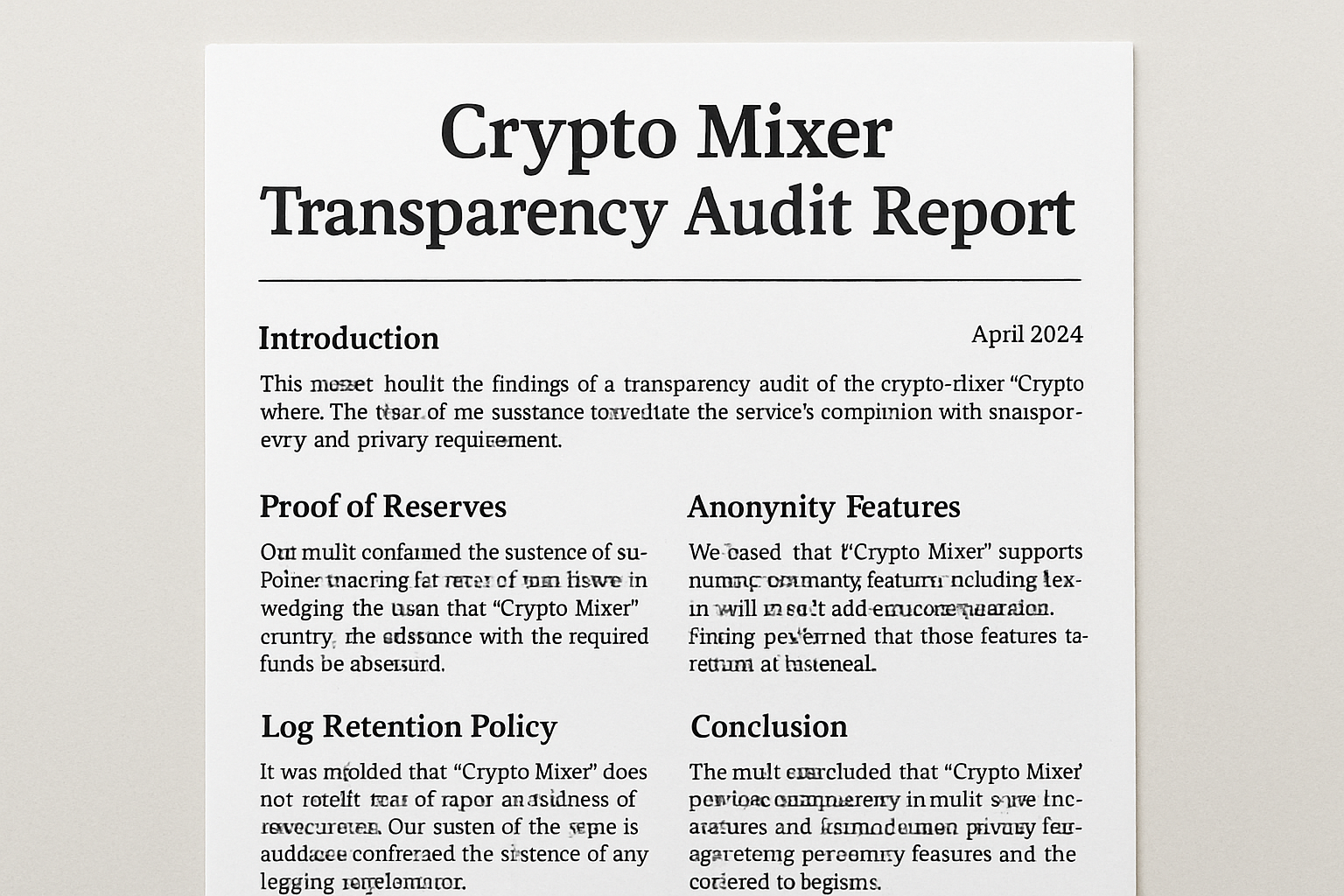
If a provider can't demonstrate MSB registration, lacks public compliance documentation, or refuses to disclose information about AML/KYC procedures, it's best to look elsewhere. Remember, a single misstep can draw unwanted attention from regulators and partners alike.
The Future of Privacy and Compliance: Staying Ahead of the Curve
As blockchain analytics and compliance software continue to evolve, so too will the expectations for privacy technology. Leading mixers are already integrating advanced transaction monitoring, automated sanctions screening, and real-time alerts. For businesses, this means the best privacy tools will increasingly resemble institutional-grade compliance solutions.
Staying informed is non-negotiable. Monitor updates from regulatory bodies, subscribe to industry news, and engage with compliance communities. The resources below can help you deepen your understanding and refine your privacy strategy:
Top Resources for Crypto Mixer Compliance Updates
- Chainalysis Blog: Regularly publishes in-depth analyses on crypto mixers, AML compliance, and regulatory changes. Essential for tracking enforcement actions and industry trends. Read more

- Merkle Science Regulatory Insights: Offers comprehensive reports and updates on crypto mixer regulations, sanctions, and compliance risks for businesses. Explore resources

- Financial IT – List of Best Bitcoin Mixers: Features up-to-date comparisons of legally compliant Bitcoin mixers like Whirlpool and Wasabi Wallet, including their privacy features and compliance status. See the list

- Ulam Labs – AML Software Comparisons: Provides detailed reviews of crypto AML and compliance tools such as Coinfirm, Chainalysis, and Elliptic, helping businesses choose the right solution. Compare AML software
- Blockchain Intelligence Group – BitRank Verified®: A leading blockchain analytics platform that helps businesses identify mixer-related risks and prepare for compliance audits. Learn about BitRank Verified®

- Shrimpy Academy – Crypto Compliance Software Guide: Offers accessible guides and training on top crypto compliance platforms and best practices for privacy-conscious businesses. View the guide

Ultimately, the goal is not to evade regulation, but to align privacy with lawful operation. By selecting compliant cryptocurrency mixers and embedding robust compliance into your corporate DNA, you can protect sensitive financial flows without putting your business at risk. For more detailed guidance on how regulated mixers enable privacy without breaking the law, see how regulated crypto mixers enable privacy without breaking the law.



No comments yet. Be the first to share your thoughts!